
The Nile After GERD: Ethiopia’s Grand Project and the New Arithmetic of African Power
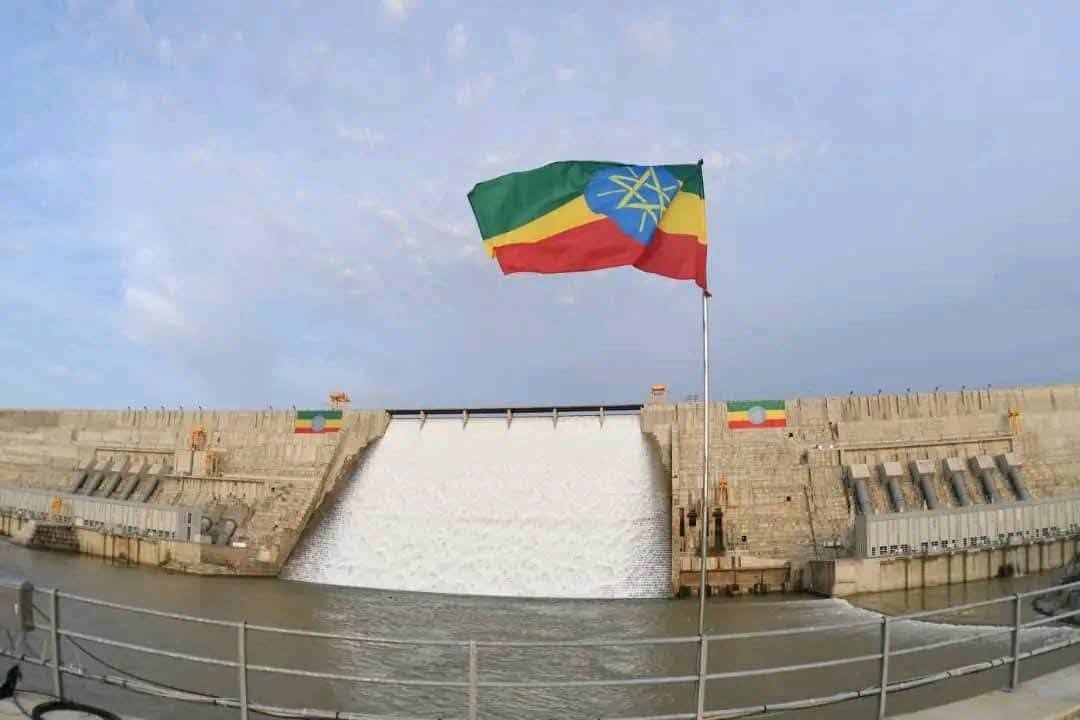
Addis Ababa, September 9, 2026 (FMC) — A year after Ethiopia inaugurated the Grand Ethiopian Renaissance Dam (GERD), the giant structure rising from the Abay in the Benishangul-Gumuz region stands as far more than a completed infrastructure project.
It is the physical expression of a long national effort to turn one of Ethiopia’s greatest natural assets into electricity, productive capacity and a new source of economic power.
Inaugurated on September 9, 2025, after a 14-year construction journey that began in 2011, the GERD has become one of Africa’s defining infrastructure undertakings.
Its reservoir can hold about 74 billion cubic metres of water, while the project is designed to generate an average of roughly 15,759 gigawatt-hours of electricity annually.
The dam itself stretches about 1.8 kilometres and rises 145 metres, giving physical scale to an ambition that is ultimately measured not in concrete and water, but in power.
For Ethiopia, that power carries an economic meaning that extends well beyond the turbines.
Electricity remains one of the fundamental foundations of industrialisation.
A larger generation base can support manufacturing, expand digital infrastructure, strengthen services, improve access to electricity and create the conditions for economic activity to move beyond the limits imposed by energy shortages.
The GERD therefore represents an attempt to convert the natural flow of the Abay into an economic flow—water into electricity, electricity into production, and production into development.
The project’s importance is also reflected in its intended contribution to Ethiopia’s national electricity system.
Official GERD data indicate that the project is expected to make a significant contribution to electricity supply while supporting wider electrification and the country’s plans to expand energy exports.
That export dimension gives the dam a distinctly regional character.
Ethiopia’s growing electricity-generation capacity offers an opportunity to deepen power connections with neighbouring countries and contribute to a more integrated East African energy market.
Electricity generated in Ethiopia can travel across borders, allowing energy resources in one country to support economic activity in another. In that sense, the GERD is not only a national power station; it is part of a broader infrastructure geography in which electricity can become a bridge between economies.
This is where the meaning of the project begins to extend beyond Ethiopia’s borders.
The GERD sits on the Blue Nile, one of the principal tributaries of the Nile, placing a massive energy project at the intersection of development, regional integration and one of Africa’s most consequential transboundary river systems.
Its emergence has inevitably given the Nile Basin a new strategic dimension: the river is not only a question of water, but increasingly also of energy, infrastructure and economic transformation.
Ethiopia has consistently presented the dam as a development project designed to generate electricity while maintaining that it does not seek to deprive downstream countries of their water.
At its grand inauguration, Prime Minister Abiy Ahmed again called for cooperation with Egypt and Sudan, framing the future of the Nile around shared development and dialogue.
That message was echoed, in different forms, by African leaders attending the inauguration.
Kenyan President William Ruto presented the project as evidence of Africa’s capacity to pursue large-scale development on its own terms, while South Sudanese President Salva Kiir Mayardit expressed interest in accessing electricity from the project.
African Union Commission Chairperson Mahmoud Ali Youssouf likewise cast the GERD as part of Africa’s wider infrastructure and green-energy ambitions.
Their presence offered a glimpse of the dam’s continental significance. But the deeper story lies in what the project represents for Ethiopia itself.
The GERD was financed overwhelmingly through Ethiopian resources, including government bonds and contributions from citizens, turning its construction into a national mobilisation on an exceptional scale.
The financing model made the dam not simply a state infrastructure programme, but a project in which millions of Ethiopians could see a direct stake.
That national ownership has become inseparable from the symbolism of the GERD.
For more than a decade, the project remained a work in progress—its construction unfolding alongside Ethiopia’s wider economic and political transformation.
Its eventual inauguration therefore marked not simply the completion of a dam, but the arrival of a national project that had occupied a singular place in Ethiopia’s public imagination.
Yet the real test of the GERD is no longer whether it can be built.
It is what Ethiopia can build with the power it generates.
The answer could shape the country’s next phase of economic transformation.
Reliable and expanded electricity can underpin industrial parks and factories, support digital businesses and data infrastructure, enable broader electrification, reduce dependence on more expensive energy sources and create new possibilities for regional electricity trade.
The dam’s economic significance consequently lies in the chain it can activate: water, power, industry, trade and growth.
That chain also places Ethiopia within a wider African search for energy security.
Across a continent where electricity access and reliable power supply remain major constraints on industrialisation, large renewable-energy projects carry significance beyond their national borders.
Hydropower, when sustainably managed and integrated through regional grids, can allow countries to turn natural endowments into shared economic infrastructure.
The GERD is therefore part of a larger African question: how can the continent transform its vast natural resources into the energy required to industrialise, connect economies and create prosperity?
A year after its inauguration, Ethiopia’s answer is standing on the Abay.
The project has changed the physical landscape of the river and, increasingly, the strategic conversation surrounding it.
The Nile Basin now contains a landmark whose significance reaches simultaneously into Ethiopia’s development agenda, East Africa’s emerging electricity networks and the broader debate over how African countries can harness their own resources for economic transformation.
The GERD’s first year, then, is not merely a milestone to be commemorated.
It is the opening chapter of a much larger experiment: whether the power generated by the Abay can help power a more industrial, connected and economically ambitious Ethiopia—and whether that energy can become part of a more integrated African future.
The dam may have been built across a river.
Its ultimate measure will be how far the power from that river travels.