
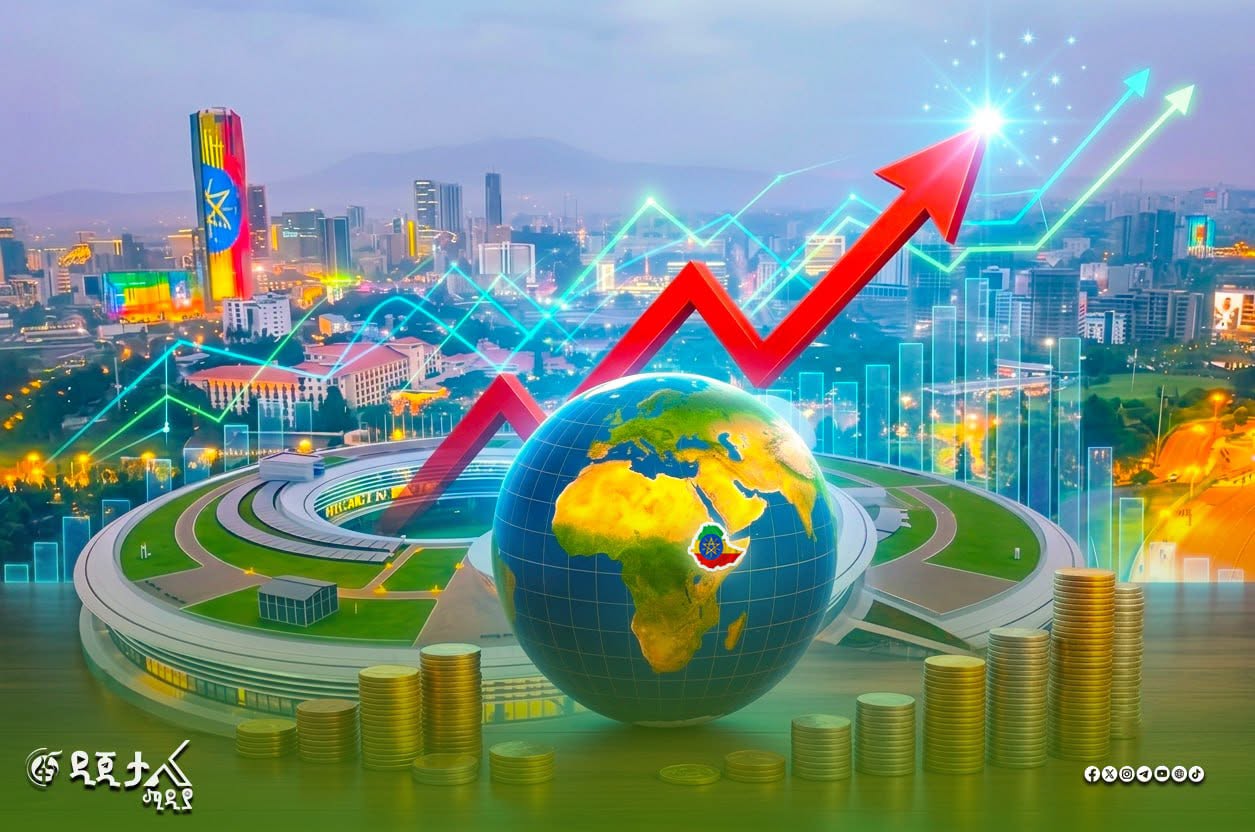
The Future Has a Color
Addis Ababa, July 25, 2026 (FMC) — The future of economic growth is increasingly being shaped by a fundamental question: how can nations pursue prosperity while protecting the planet that sustains life? As climate change, environmental degradation and the depletion of natural resources continue to challenge the world, countries are turning toward green economy models that seek to balance development with environmental sustainability.
A green economy represents a shift from traditional growth approaches that often rely heavily on carbon-intensive activities toward systems that promote clean energy, efficient resource use and the restoration of natural ecosystems. It focuses on reducing environmental damage while creating new pathways for sustainable economic progress.
At the heart of this approach is the transition from polluting energy sources, such as fossil fuels, to cleaner alternatives including solar, wind, geothermal and hydropower. It also emphasizes responsible waste management, recycling, pollution reduction and the protection of forests and water resources that play a critical role in maintaining ecological balance.
The ultimate ambition of a green economy is to create a world where economic advancement does not come at the expense of the environment — where carbon emissions released into the atmosphere are balanced by the capacity of natural systems, including forests and water bodies, to absorb and restore ecological balance.
For Ethiopia, the green economy agenda has become a central pillar of its development vision. The country introduced its Climate Resilient Green Economy (CRGE) strategy in 2011, making a commitment to achieve economic growth while limiting carbon emissions and positioning itself among countries advancing climate-resilient development.
Since then, Ethiopia has continued to pursue initiatives aimed at building a sustainable economic model, with the Green Legacy Initiative becoming one of the country’s most visible environmental programs. Alongside large-scale tree planting efforts, Ethiopia has expanded its focus on renewable energy development and the wider use of clean energy alternatives.
The country’s green economy drive extends beyond environmental conservation. It includes efforts to promote cleaner public transportation systems with low or zero carbon emissions, develop greener urban spaces and support economic activities that align growth with sustainability.
Through these initiatives, Ethiopia is seeking to demonstrate that environmental protection and economic development can move together. The approach reflects a broader ambition to build resilience against climate challenges while creating a foundation for long-term prosperity.
The green economy vision is also closely linked with Ethiopia’s goals of strengthening food security, protecting natural resources and creating a more sustainable economic structure. By investing in renewable energy, ecosystem restoration and climate-smart development, Ethiopia aims to contribute to global efforts to address climate change while advancing its own development aspirations.
As the world searches for solutions to the growing climate crisis, Ethiopia’s experience highlights a message that development and environmental responsibility do not have to stand in opposition. The path toward a sustainable future is being built through choices made today — and that future, Ethiopia believes, has a color.