
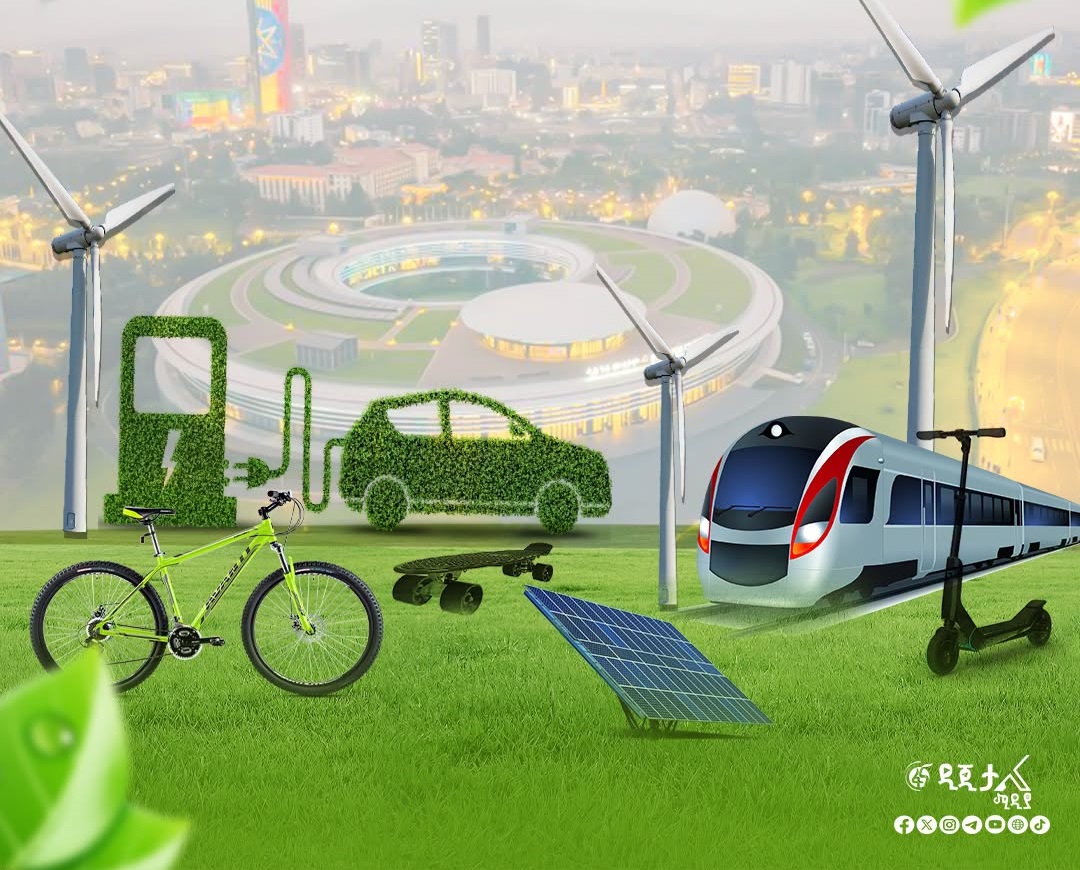
Ethiopia Accelerates Shift to Electric Mobility as Clean Transport Drive Gains Momentum
789
Addis Ababa, August 5, 2026 (FMC) — Ethiopia is steadily transforming its transport sector by accelerating the transition from petroleum-powered vehicles to electric mobility, while expanding the use of natural gas-powered transport as part of a broader strategy to reduce fuel imports, ease foreign currency pressures and advance a cleaner transport system.
The transition forms part of the government’s long-term economic and environmental agenda aimed at reducing the country’s dependence on imported petroleum products, which currently account for one of Ethiopia’s largest foreign currency expenditures.
Ethiopia spends between 4 billion and 6 billion U.S. dollars annually on fuel imports, consuming an estimated 60 to 70 percent of the country’s yearly export earnings in foreign exchange. In addition, the government allocates billions of birr every year to fuel subsidies to stabilize domestic prices and shield public transportation from sharp fare increases. Last year alone, nearly 70 billion birr was spent on fuel price stabilization.
To reduce these fiscal and foreign exchange burdens, the government has been gradually phasing out fuel subsidies while aligning domestic fuel prices with international market conditions. At the same time, it is actively promoting the widespread adoption of electric vehicles (EVs) and expanding the use of domestically produced natural gas as transitional transport energy.
Officials view the transition as a strategic shift that will significantly reduce fuel import bills, improve macroeconomic stability and strengthen Ethiopia’s energy security by utilizing the country’s abundant renewable electricity resources.
Electric vehicles are expected to play the leading role in the country’s long-term transport transformation. Operating entirely on battery power, they are well suited to Ethiopia’s expanding electricity generation capacity, particularly as renewable energy projects continue to come online.
Natural gas-powered vehicles, meanwhile, are expected to serve as an intermediate solution by replacing diesel and gasoline while EV infrastructure continues to expand.
Beyond reducing foreign exchange expenditures, the transition is also expected to lower transportation and maintenance costs. Compared with conventional fuel-powered vehicles, both electric and gas-powered vehicles require significantly lower day-to-day operating expenses, contributing to lower transport costs and helping ease inflationary pressures.
The shift is also aligned with Ethiopia’s climate objectives by reducing carbon emissions and improving air quality through cleaner transportation technologies.
Supporting infrastructure is expanding alongside vehicle adoption.
The government is scaling up electric vehicle charging stations nationwide to facilitate broader EV deployment, describing the investment as essential to accelerating Ethiopia’s green transport transition.
At the same time, the country is expanding compressed and liquefied natural gas infrastructure using domestic gas resources from the Calub gas field in Ethiopia’s Somali Region.
A modern ENGAS natural gas refueling station constructed in Kaliti, Addis Ababa, has already been completed and is ready for operation. Equipped with large gas storage facilities and modern dispensing systems, it is expected to serve the capital’s growing fleet of gas-powered public buses.
Adama and Dire Dawa have also been selected for the first phase of additional natural gas refueling infrastructure.
The government is converting more than 1,200 diesel-powered city buses operating in Addis Ababa to compressed natural gas, making them among the first major beneficiaries of the expanding refueling network.
Recent government directives have further encouraged the transition by allowing fully natural gas-powered freight vehicles to enter Ethiopia duty-free, creating additional demand for gas transport infrastructure.
Authorities estimate that replacing diesel and gasoline with electricity and natural gas could reduce transport operating costs by at least 50 percent.
The government is also encouraging private investors to participate in constructing charging stations, gas refueling facilities and related clean transport technologies as the sector continues to expand.
Taken together, the country’s growing electric mobility ecosystem, expanding natural gas infrastructure and broader clean transport investments represent a significant component of Ethiopia’s efforts to modernize its economy while reducing reliance on imported fossil fuels.
As fuel imports remain Ethiopia’s single largest foreign exchange expense, replacing them with domestically generated renewable electricity and locally produced natural gas is increasingly viewed as a critical pillar of the country’s long-term macroeconomic resilience, energy independence and sustainable development.